

How to Avoid Fake “High-Speed” Ethernet Patch Cords When Shopping Online


Imagine a gamer sitting hunched over his computer monitor with his fists clenched as he watches the video feed buffering for what seems like an eternity, even after recently upgrading to gigabit fiber internet service. Although the modem and router are functioning fine, the gamer’s internet speed crawls to a stop as a result of the poor quality of the Ethernet patch cords purchased from an online vendor that touted it as suitable for high-speed gaming. The Ethernet cable in question was made of Copper Clad Aluminum (CCA), which has been proven to reduce signal quality through higher levels of attenuation and impedance. Many sellers obscure the fact that their products are of low quality by creating and displaying high-quality glossy images.
As a result, the consumer only finds out about the low quality after purchasing the product and writing their one-star review describing the experience—loss of productivity, time wasted on troubleshooting, etc. After spending your hard-earned money on premium routers and switches, the key to attaining true gigabit speed may be hidden in plain sight. You may be using a counterfeit Ethernet cable that portrays itself as a high-speed gold Ethernet cable. The objective of this guide is to provide you with three easy checks based on physics that will allow you to determine if you have a truly high-quality Ethernet cable capable of delivering consistent gigabit performance.
The seller has concealed the tricks; you will uncover the truth behind them, step by step. Use your detective skills to scour the seller’s website for clues that indicate a counterfeit product before the package arrives at your home.
 Why Do Sellers Push “Gaming Cat8” So Hard?
 Why Do Sellers Push “Gaming Cat8” So Hard?
The issue with sellers having “Gaming Cat8” labels on their cables is that buyers have become enamored with the idea of having cables with headline speeds of 40Gbps. Unfortunately, very few devices are available to verify these claims immediately. This allows sellers to put high category badges on inexpensive wires and sell them as cables capable of supporting such speeds. However, when buyers make these purchases, they quickly realize they are experiencing problems due to high CRC error rates and packet loss under heavy loads, when they expected their purchases to perform flawlessly.
The Hype Behind Overstated Categories
The sellers of Cat8 products are hoping that some consumers won’t know how to categorize it, as they are advertising Cat8 as needed for gaming and streaming when, in fact, at home, the majority of households will max out at 1Gbps. Activity on the technical forum supports this idea through an example of a homeowner who installed multi-gigabit-capable infrastructure throughout their entire home and spent weeks trying to diagnose faulty switches and network interface cards (NICs) based on cost. They eventually found out, after spending tens of thousands of dollars on all the hardware, that a very low-cost “Cat8” patch cord had high DC resistance (yet an extremely low price), which would not allow the link to train at high speeds and couldn’t keep twists correct throughout the length of the cord. It is apparent that some sellers have been specifically targeting consumers looking for “future-proof” products to purchase inferior quality materials.
Shielding That Backfires in Homes
We’ll see in this section that you can use these shielding techniques to help reduce EMI in your own home, but because there are no good grounding options available for these types of shielded cables, any shielded cable would simply act as an antenna, which will inject EMI noise into the signals transmitted over the wire pairs. This can degrade the signal-to-noise ratio (SNR), leading to intermittent packet loss and reduced throughput, especially in environments with high electrical interference. An example of this would be if your IP PoE video surveillance camera feed flashes on and off (not because there is an issue with the power supply, but because of significant voltage drops and excessive heat generation in the low-conductivity CCA conductors used to provide PoE). This happens due to the coupling of these two elements causing problems that lead to what seems like failed connections.
Certification Gaps Sellers Exploit
Typically, these types of shielded cables and their manufacturers claim to be “tested” without being able to provide actual testing documentation. This is a result of gaps in the way that TIA-568.2-D describes how cables should be certified and what the actual testing methodology should be to demonstrate that these cables meet TIA standards for Near-End Crosstalk (NEXT) and Return Loss. Because of this, sellers who sell products that don’t meet the certification requirements can easily mislead customers into purchasing what is considered an acceptable Ethernet cable when, in fact, it is not. In my own experience, I have attempted to use the so-called “certified” economy-grade Ethernet cables on many occasions, and the only time I have been able to continue using them was once I removed them and replaced them with actual pure copper Cat6a cables that provide consistent and reliable service without the drama.
By stripping away the layers of deception, you can create solid support for your Cat6a cables by ensuring that the cables you are purchasing are made without any marks on their labels.
How to Decode Those Sneaky Product Listings
 How to Decode Those Sneaky Product Listings
Although the product listing may seem honest, the truth is that sellers are very clever when creating product titles. For example, a seller might create an enticing title that includes words such as “fast” and “speed,” and consumers will immediately start to scan the title looking for any signs of deception (e.g., flat/slim) related to physics. Genuine Ethernet patch cables have thick 23AWG cores; therefore, if it is labeled as “flat,” then chances are cheaper materials are used on the inside. Look closely at pictures for signs or elements that are blurry or appear distorted, as they may indicate a deceptive seller trying to produce a fake product.
Spotting Title and Spec Mismatches
The first clue is found in the title, as legitimate products contain specific information (i.e., ’23 AWG solid bare copper’), whereas counterfeits use vague descriptive terminology, for example, “40Gbps gaming flat” (implying speed). Any product marketed as having a “flat” design will almost always contain thinner wire, which will not endure any amount of stress. To validate as legitimate, it must include sufficient specification; counterfeit products typically avoid any specific industry terms and provide only “high-frequency compatible.”
True-vs-Fake Ethernet Patch Cord Signals
The description and images themselves will usually provide all the information you need to determine the difference between a legitimate product and a counterfeit; the chart below provides an easy comparison.
| Signal Type | Pure Copper Ethernet Cable Traits | Fake “High-Speed” Ethernet Patch Cord Flags | Real-World Edge |
| Title Keywords | “23AWG Solid Bare Copper Cat6a TIA” | “Flat Slim 40Gbps Gaming Pure Copper” | Spots impossibles right away |
| Spec Details | “TIA/EIA-568-C.2 Oxygen-Free, 23AWG” | “High Freq Flat Design CCA-Compatible” | Ensures low-resistance over distance |
| Photo Clues | Uniform twists, crisp ETL stamp | Bulky RJ45 on thin jacket | Reveals build flaws upfront |
| Physical Limit | Thick core needs round jacket | Flat designs often compromise pair twisting | Matches real copper density |
| Cost Floor | Above copper market (~$1.50/2m min) | Sub-material pricing | Filters out unviable cheap imitations |
| Test Evidence | Dated Patch Cord report link | “Lab Certified” image only | Proves actual measured results |
| Long-Term Reviews | No interference complaints | EMI spikes post-setup | Predicts everyday reliability |
Copper is the most transparent market, and anyone who attempts to sell Cat8 copper cable with “Flat Slim” construction and the lowest possible price is doomed to fail because of the fundamental principles of physics. The seller’s listing description of Cat8 copper cable must meet the basic material thickness standards. Physics has already determined these sellers’ claims, and this article will show how physics determines if a claim is true or false. Flat and slim design cables fail when under a load, unlike a true cable made from 100% pure copper, which performs at a high level under load.
Reading Between Photo Lines
When looking at the image of the cable, look closely and examine the images for signs of authenticity. Authentic images will have even twists and no smudging at the ends of the cables. In contrast, counterfeit images will have a bulge at the end of the cable, and these discrepancies will expose them as counterfeit. Cost checks can also show that an authentic product will hit a price floor, whereas a counterfeit will be priced below that price floor.
What Your Kitchen Scale Reveals About Your Cable
 What Your Kitchen Scale Reveals About Your Cable
While images can deceive your eye, kitchen scales provide accurate measurements—while pictures can conceal the amount of actual material weight. During delivery, you weigh the 2-meter Ethernet patch wire on your personal scale to verify its actual weight. Unshielded 23AWG pure copper Ethernet cords typically weigh 85–100 grams, with foil and braided sheathing increasing the weight by 15–20 percent. Cords weighing less than 65 grams likely have aluminum materials added to reduce manufacturing costs.
Weighing the Truth at Home
To begin determining the actual weight of your Ethernet patch cable, place it flat on the scale, and when 0 is displayed, write down the reading. The higher weight of pure copper causes low-quality substitutes to immediately indicate a problem due to their low densities; anything less than 65 grams is a clear warning. One homeowner threw away a low-density substitute like this, saving them from regular rebooting problems related to their installation of power over Ethernet.
Scraping for Metal Color
Low weight could also be verified by scraping the wire end with a knife. A silver- or white-colored core under the thin copper cladding indicates that the wire lacks electrical conductivity compared to a wire that has a solid, shiny, healthy red color on the surface without signs of oxidation that typically cause frequent disconnections.
Bending to Test Toughness
Afterwards, you’ll want to use your fingers to apply pressure to the wire, creating a bend—best done quickly, with a firm but not overly firm grip. When you bend the wire quickly, you should notice it returns to its original position. This indicates you’re working with a legitimate 23AWG wire, which provides the lower resistance necessary for stable high-speed data transmission. If you use a fake wire, the thinner the wire, the more you will see a bend or crease—a weak point in the fake construction.
Why These Checks Never Lie
The low density of aluminum is always the giveaway, as it weighs less than a pure copper wire. A good testing procedure is to weigh it first, scrape if it’s light, and then bend. After following this procedure, you should be able to determine that the Ethernet cable is pure copper without needing special testing equipment. One person conducted this testing and replaced a 65g fake Ethernet cable after the tests, seeing their connection speeds return to full gigabit speeds.
How to Spot Fake Fluke Test Reports
 How to Spot Fake Fluke Test Reports
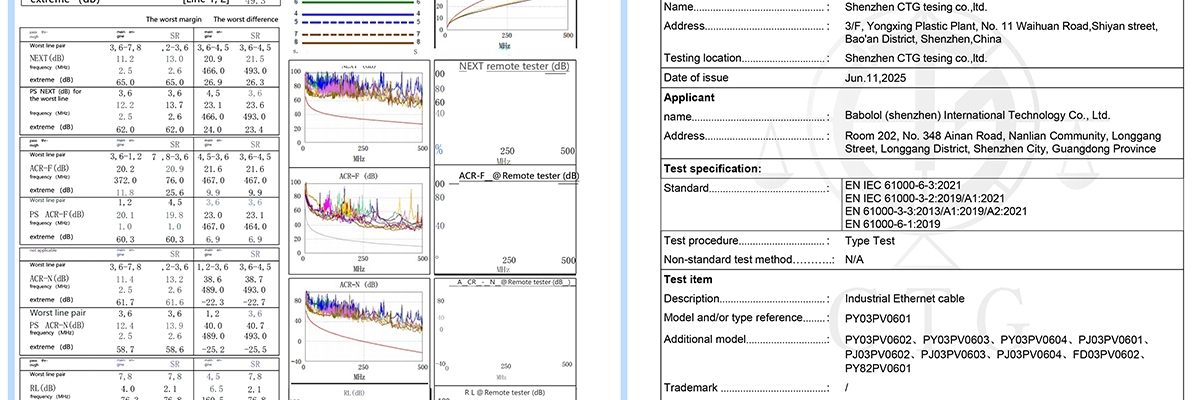
While many sellers make false claims about their products, buyers can check authenticity with detailed testing reports. Sellers counteract this by providing polished test images that are often convincing to someone looking at just the scan. These types of reports are generally vague and generic, covering the entire class of network cables and thus do not provide the detail needed to identify the true flaws in a product.
Authentic Fluke Testing Reports
Authentic Fluke Testing Reports provide an end-to-end performance report of a specific length, matching exactly the specifications of the Ethernet patch cord. A genuine Fluke Test Report is the only true report of a Patch Cord. All Fluke Test Reports must meet stringent criteria, such as maximum transmission efficiency, NEXT, and attenuation; therefore, the reports provide no latitude for interpretation. An example of an appropriate report would be TIA Cat.6A Patch Cord 2.0M (as opposed to a Channel Test, which is too lenient to verify individual patch cord quality).
Decoding Real vs Recycled Scans
Fakes will typically look like the original, but authentic reports have unique project numbers linked to individual batches, dated within the previous 12 months for compliance with current regulations and standards. It is easy to spot the seller who uses the same photos over and over again, especially if there is no length or 23AWG rating on the cord you purchased; therefore, it should raise red flags immediately. If you purchase a copy of anything, it will not hold up over time and will ultimately lead to disastrous consequences later on.
Seller Q&A That Exposes Fakes
Vendors who use shady tactics are often unable to give a clear answer when asked direct questions. Send these inquiries through chat before you make a purchase so that you may see how their answers reveal the truth. Request the project name and look for “Patch Cord Test for 2m Cat6a 23AWG.” Vague answers typically indicate that you are probably being sold generic stock that does not suit your requirements.
Keep asking for the date of the test; if the date is not less than a year ago, it is unreliable because testing procedures and standards have changed and no longer guarantee the same level of speed as when tested. Hold to the highest standards and insist on using the Fluke Patch Cord Test for patches of this length. This patch will only be valid if tested with cables manufactured from 95%+ pure copper.
Vendors who can provide proof that the test passed will confirm low resistance, but vendors who provide fake tests will avoid revealing this. Shady vendors cannot become compliant with rigorous testing of CCA and therefore cannot provide the results of the Fluke Patch Cord Test for cables greater than 2m. Many vendors will either stall or provide mismatched answers to buyers who ask these types of questions. A buyer who pushed like this received a reply that confirmed using a “stock photo,” avoiding a bad purchase.
Limits That Prove Performance
The Fluke limits demonstrate that one can distinguish between honest and fraudulent results by looking at both the return loss and insertion loss of the Patch Cord, which indicates the long-term stability of gigabit transmission. One should not use the “Channel” test to determine the health of the connectors but should focus on testing the Patch Cord itself for an accurate picture of the total performance of the cabling system. Detailed testing of the same Patch Cord establishes the cable’s reliability in live operation in addition to laboratory testing.
While official reports can provide valid information about the product, a definitive picture of the quality of a Patch Cord can only be determined by checking the condition of the external connectors. The first places to look for deficiencies in quality are in the connectors, as poorly manufactured connectors will be the first to fail under daily use.
Why Cheap Gold Connectors Always Fail First
 Why Cheap Gold Connectors Always Fail First
Although test results can look impressive on paper, connectors are subjected to more severe conditions and abuse daily, which causes cheap gold plating to wear off quickly due to friction between the connector and port. Gold-plated connectors will have contact occurring in a matter of minutes because contact points are butted up against each other, resulting in arcing and intermittent drops every few minutes. Genuine 50 micro-inch (µ”) gold plating protects connectors from the accumulation of corrosion and ensures that the signal is not disturbed.
Gold Plating That Fades Fast
Disregard the appearance of the connectors when you first receive them, since genuine gold will maintain its luster through months of plugging and unplugging and is less likely to look as good as low-quality connectors that undergo tarnishing. Flimsy gold plating (generally under 10 micro-inches) will rub off after only a few weeks of use and will cause the connectors to be intermittent during peak times. A user may experience a 50% drop in link speed or constant re-negotiations after a few months as the thin plating wears away and the underlying metal oxidizes.
Strain Relief Grips Under Pressure
Inspect the boot to evaluate how strong the grip is. You will notice that the boot has solid relief above the RJ45 plug for a distance of 15mm, with enough flex to support bending of the cable with no cracking. RJ45 plugs with short, rubber-like boots break off or become damaged from being moved around when using desk management of the cabling. In this process, the cable’s conductors will also become loose over time.
A deeper boot provides a direct connection to the certification standards for cables, which indicate that the cable was made to support heavy movement.
Failure Timeline in Action
The cycle of failure is predictable, with the first cycle lasting seven days with no problems, followed by a loss of signal in the third month due to the buildup of corrosion. You can refer back to the pictures in the earlier portion of this evaluation to assist you in determining the type of conductors and the physical design of the connectors. The bulky connectors used for thin-jacketed cables are also a source of concern. Connectors made from pure copper wire have a better chance of lasting longer than connectors made from CCA because the pins in pure copper cables have higher tensile strength.
Your Never-Fail Shopping Checklist
 Your Never-Fail Shopping Checklist
These checks will help you select the right cables by ensuring you do not get taken advantage of when buying Ethernet cables. Many items in online listings and tests are imitations, and you need to check this list before and after purchasing Ethernet Patch Cords. A 23AWG solid core cable and a round jacket will perform much better than flat, slim designs that have thin fillers hiding inside them and will not be durable. Next, look for a dated Patch Cord report when purchasing Ethernet Patch Cords; “Lab certified” means they won’t work for you, so make sure you have a report that meets current Fluke testing requirements.
If you come across a 2m unshielded Ethernet Patch Cord with a weight of less than 85g, you can be certain that it is counterfeit. Resist the temptation to just plug it in and see (your time is worth way more than a couple of dollars in return shipping—the use of counterfeit Ethernet Patch Cords will result in dropped connections and many lost hours trying to fix it). Return it right away, end up with a pure copper Ethernet cable that has a red shine and stiff rebound, and you will have a long-lasting product. Look for 50 micro-inch gold pins for the best results and deep strain relief to prevent your boots from cracking under pressure.
Boots with grips longer than 15mm do very well under pressure. Look for no drops on your connection after six months—silence is more valuable in the long run than any advertisements. If you follow these steps when purchasing your Ethernet Patch Cords, you will not experience any slowing of speeds ever again.
Reference Sources
- ANSI/TIA-568 – Wikipedia – Official standards for Ethernet cabling, including patch cord lengths, categories like Cat6/Cat8, and performance specs for high-speed networks.
- Pure Copper vs CCA Ethernet Cables – Detailed comparison of pure copper vs. CCA cables, covering conductivity, PoE issues, weight differences, and why CCA fails in real use.
- Six Ways to Spot Counterfeit Cable – Practical guide to identifying fake Ethernet cables via markings, weight, construction, and UL/ETL verification.
- Fluke Patch Cord Testing Guide – Video demo of Fluke Networks testing Ethernet patch cords for TIA/ISO compliance, NEXT, attenuation, and real-world verification.
- CCA vs Pure Copper Ethernet Guide – Breaks down material differences, durability, signal integrity, and why pure copper is essential for stable high-speed Ethernet patch cords.